Samir Nasri is a French former professional footballer best known as a technically gifted attacking midfielder for Marseille, Arsenal and Manchester City. Born on 26 June 1987 in the Marseille area, he emerged from one of France’s most productive academies before becoming a prominent figure in the Premier League and representing France at senior international level.
Nasri’s career combined close control, creative passing and incisive movement with significant team success. He won two English league championships with Manchester City and was named French Player of the Year in 2010, although later spells away from England were less influential. His journey ultimately took him through France, England, Spain, Turkey and Belgium.
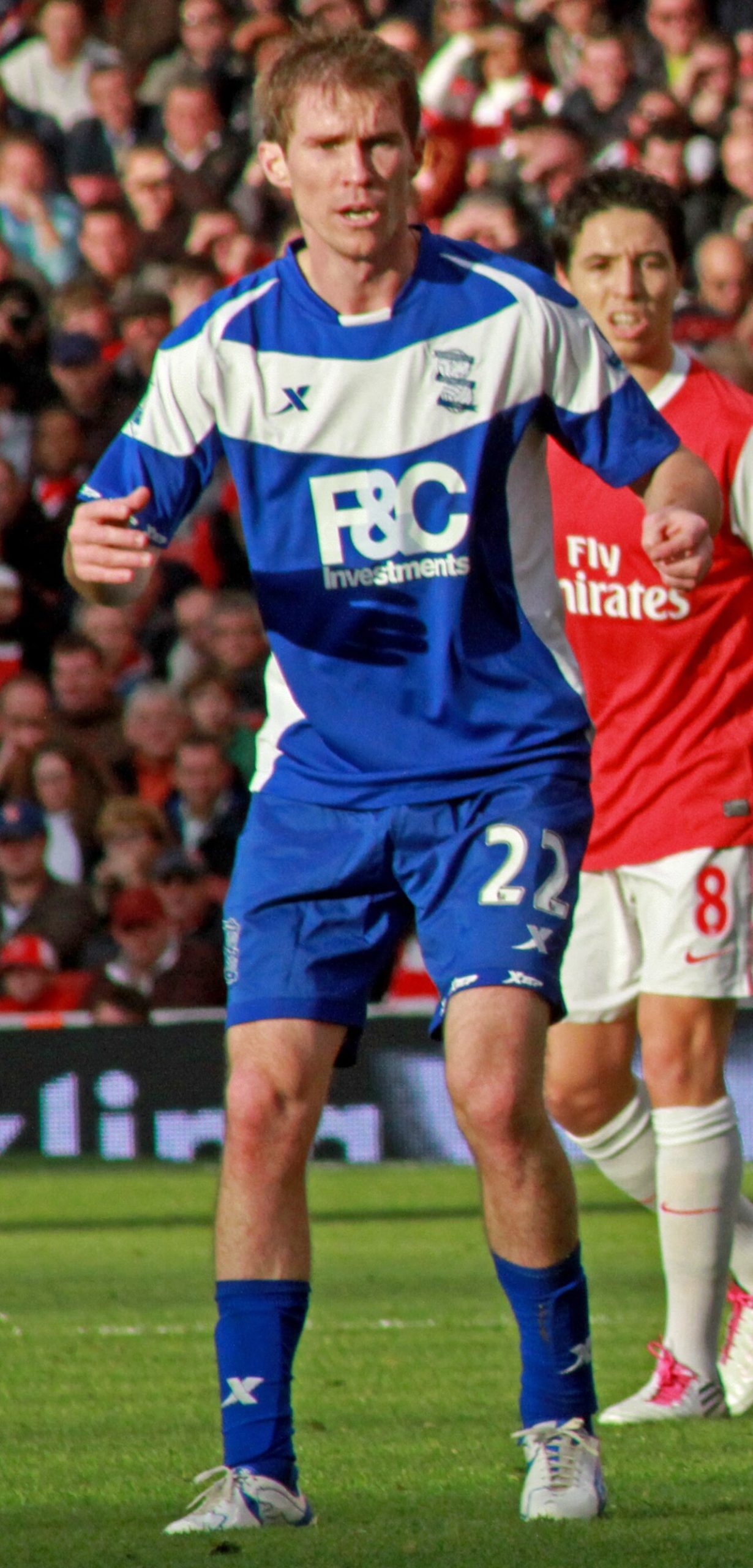
Wikimedia Commons
Early life in the Marseille area
Nasri was born into the football culture of southern France. Biographical sources differ slightly in how they identify his birthplace: ESPN lists Marseille, while the fuller account on Nasri’s biographical profile identifies Septèmes-les-Vallons, a northern suburb in the Marseille area. Both descriptions place his upbringing within the wider Marseille region that shaped his early football identity.
He began playing locally before entering the youth system of Olympique de Marseille. One supplied biographical account states that he joined Marseille’s academy at the age of 10. The move gave him a structured football education at a club with intense local expectations and a long record of developing technically accomplished players.
Nasri’s ability to receive the ball in crowded areas and move past opponents made him stand out during his development. Although he would later be used in several attacking roles, his formative qualities were those of a central creator: awareness, balance, imagination and confidence in possession.
Breaking through at Marseille
Nasri progressed from Marseille’s academy into the first team and began his senior club career during the 2004–05 period. He was still a teenager when he entered a demanding environment in which young local players were closely scrutinised. His performances soon established him as one of the leading prospects of his generation in French football.
At Marseille, Nasri operated as an attacking midfielder who could drift between central and wide positions. He was not simply a traditional winger or a fixed number 10. Instead, he looked for space between midfield and defence, linked combinations around the penalty area and carried the ball forward when passing lanes were closed.
Marseille won the UEFA Intertoto Cup during his time with the club, while Nasri’s individual progress brought recognition as the UNFP Young Player of the Year for 2006–07, as recorded in the supplied career material. By his final season in France, he was an established first-team player rather than merely a talented academy graduate.
That development attracted interest beyond Ligue 1. In 2008, after four senior seasons in Marseille, Nasri moved to Arsenal and entered English football at the age of 21.
Arsenal and the rise of a Premier League creator
Arsenal offered Nasri a platform suited to his technical strengths. The club’s possession-based approach asked midfielders to exchange positions, play quickly in confined spaces and contribute both as creators and scorers. Nasri could begin on either flank and move inside, or take up a more central position behind the forwards.
His adjustment was not limited to coping with the physical demands of English football. He also had to find his place in a squad containing several players who wanted the ball in similar areas. Nasri nevertheless became an important attacking presence, using changes of direction and sharp acceleration to escape pressure.
The 2010–11 campaign represented the high point of his Arsenal period. His ability to score as well as create made him more decisive, and his form contributed to him being recognised as the 2010 French Player of the Year. Statistical summaries on FBref’s Samir Nasri record also list that honour alongside his later Premier League titles.
Nasri did not win a major trophy during his three years at Arsenal, but he enhanced his reputation considerably. He left in 2011 as an established Premier League midfielder, moving to Manchester City at a moment when the club was assembling a squad capable of challenging for the championship.
Manchester City and major honours
Manchester City confirmed Nasri’s arrival in 2011. ESPN later described him as the final piece added by manager Roberto Mancini as City sought to turn their investment and ambition into a Premier League title. Nasri joined a squad filled with attacking quality, so his role required tactical flexibility as well as individual skill.
He could play from the left or right, combine centrally and help City retain the ball against deep defensive blocks. Rather than functioning only as a high-volume chance creator, Nasri often contributed by controlling the rhythm of attacks, exchanging short passes and choosing when to accelerate into the final third.
City won two Premier League championships during his time at the club. He was part of the squad that delivered the first of those titles in the dramatic 2011–12 season and later contributed to another championship. His honours list also includes an English League Cup and an English Super Cup, the latter corresponding to the Community Shield in English football.
Available statistical databases vary according to the competitions they include. A Premier League-specific summary from StatMuse credits Nasri with 129 league appearances, 18 goals and 32 assists for Manchester City. A separate widely circulated all-competition total lists 176 appearances, but the league-only numbers provide the clearer comparison because their scope is defined.
Nasri’s City career was not uniformly secure. Competition for places remained intense, and his influence changed across different managerial periods. Even so, his two league titles ensure that this was the most decorated phase of his club career. He was more than a peripheral squad member: at his best, he provided technical control and attacking intelligence within championship-winning teams.
Sevilla, Antalyaspor, West Ham and Anderlecht
After his central role at City diminished, Nasri spent time with Sevilla in Spain. The move placed him in another technically oriented league and offered an opportunity to play regularly away from Manchester. His ability on the ball remained evident, but this period did not produce the sustained prominence of his best seasons in England.
Nasri subsequently joined Antalyaspor in Turkey. He later returned to the Premier League with West Ham United, adding another English club to a career already strongly associated with Arsenal and Manchester City. The official Premier League player profile for Nasri records his connection with West Ham and provides league-focused statistics and video material.
His final listed club was Anderlecht in Belgium. The supplied ESPN and Transfermarkt profiles both associate him with the Brussels club, while Transfermarkt now describes him as a former footballer. His later career therefore illustrates the breadth of his experience: Marseille in Ligue 1, two major Premier League clubs, and subsequent spells in La Liga, Turkey, England again and Belgium.
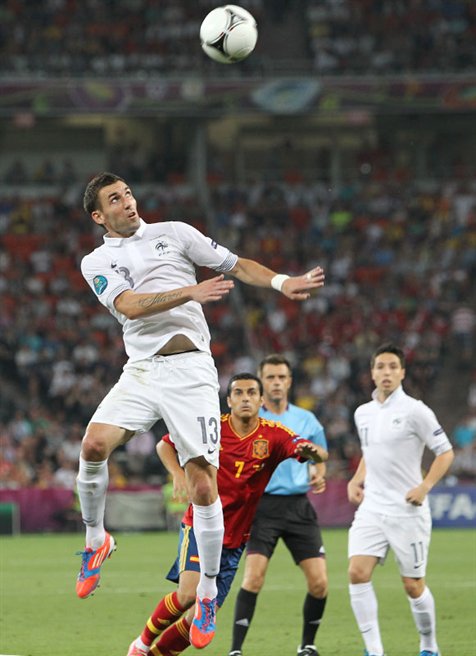
Wikimedia Commons
International career with France
Nasri represented France at youth and senior levels. His honours record includes a European Under-17 championship, placing him within a successful French youth generation before he established himself in the senior national team.
At senior level, he competed for a place in a talented and frequently changing French midfield. His club qualities—ball retention, dribbling and passing between the lines—made him a natural creative option. He was also part of France’s Euro 2012 campaign, a tournament in which the team reached the quarter-finals before losing to Spain.
His international career did not achieve the longevity or collective success of his strongest club years. Nevertheless, playing for France at major-tournament level formed an important part of his profile. Readers interested in other national-team careers can browse FootyBio’s international football biographies.
Position and playing style
Nasri was primarily an attacking midfielder, although that label does not fully describe his range of roles. He could start centrally as a playmaker, move infield from either wing or play as an advanced member of a possession-oriented midfield. His versatility was especially useful at Arsenal and Manchester City, where attacking players regularly exchanged positions.
His most distinctive attributes were close control and dribbling. Nasri could receive possession under pressure, turn away from a marker and advance through narrow spaces. He was also comfortable slowing an attack down, recycling the ball and waiting for a teammate’s movement rather than forcing an immediate final pass.
At his best, he combined those creative qualities with purposeful off-ball runs and goals from midfield. He was not defined by raw pace or aerial strength. His game depended more on balance, body positioning, rapid combinations and an understanding of where space was likely to appear.
That style could make him influential even when he did not provide the final goal or assist. It also meant that his effectiveness was closely connected to team structure and rhythm. In sides built to dominate possession, Nasri could help control matches; when his role or playing time became less settled, his influence was harder to sustain.
Career statistics and achievements
Career totals should be treated carefully because databases use different competition definitions. StatMuse credits Nasri with 364 appearances, 49 goals and 52 assists across the major European leagues covered by its top-five-league dataset. Other sources produce different totals by including domestic cups, European competition or matches outside those leagues.
- Two-time Premier League champion with Manchester City
- English League Cup winner
- English Super Cup or Community Shield winner
- European Under-17 champion with France
- 2010 French Player of the Year
- UNFP Young Player of the Year for 2006–07
- UEFA Intertoto Cup success during his Marseille period
These honours reflect the two defining strands of his career: individual recognition as one of France’s most gifted creative players, and collective success in a Manchester City side that became a major force in English football.
Legacy
Nasri’s legacy is shaped by both achievement and a sense that his talent invited exceptionally high expectations. He emerged as Marseille’s “little prince,” developed into one of Arsenal’s most dangerous midfielders and then won the Premier League twice with Manchester City. Those accomplishments represent a substantial career by any reasonable measure.
His peak is remembered for elegant dribbling, combination play and the ability to alter the tempo of an attack. His later movement between clubs prevented him from maintaining the same prominence, but it does not erase his importance to City’s early championship era or the quality he displayed at Arsenal.
For followers of French football, Nasri remains part of a long tradition of technically refined midfield creators. For Premier League audiences, he is most closely associated with the transition from Arsenal standout to title winner at Manchester City. More profiles of leading footballers can be found in FootyBio’s players archive.
Frequently asked questions
When and where was Samir Nasri born?
Samir Nasri was born on 26 June 1987 in the Marseille area of France. Some sources list Marseille, while another identifies Septèmes-les-Vallons, a northern suburb in the wider Marseille area.
Which clubs did Samir Nasri play for?
Samir Nasri played for Marseille, Arsenal, Manchester City, Sevilla, Antalyaspor, West Ham United and Anderlecht during his senior club career.
What position did Samir Nasri play?
Samir Nasri primarily played as an attacking midfielder. He could also operate from either wing or in a deeper creative midfield role.
How many Premier League titles did Samir Nasri win?
Samir Nasri won two Premier League titles with Manchester City.
Did Samir Nasri play for France?
Yes. Samir Nasri represented France at youth and senior international level and took part in Euro 2012.
What were Samir Nasri’s main strengths?
Samir Nasri’s main strengths were close control, dribbling, creative passing, positional flexibility and the ability to combine with teammates in tight spaces.
Research note
This biography is based on the supplied reference material and cross-checked career summaries. Readers should verify important biographical facts and statistics with official club, league or federation records, particularly where databases use different competition definitions or where details may change.