Roy Keane is an Irish former midfielder and manager whose authority, intensity and tactical discipline made him one of the defining footballers of the Premier League era. Born in Cork on 10 August 1971, he developed from a determined young prospect into Manchester United’s midfield leader and the captain of one of English football’s most successful teams.
His career encompassed domestic dominance, European triumph, international controversy and a later move into management. Keane’s demanding standards could make him confrontational, but they also underpinned his reputation as a formidable competitor who expected teammates to match his commitment.
Wikimedia Commons
Early life and development in Cork
Roy Maurice Keane was born in Mayfield, Cork, Ireland. His early football education took place in his home city, where he played youth football for Rockmount. A Roy Keane player profile records his association with Rockmount between 1981 and 1989.
Keane’s path into the professional game was not straightforward. Accounts of his youth regularly note that concerns about his size contributed to early rejection, but he continued playing and eventually joined Cobh Ramblers. The League of Ireland club provided him with an important platform, allowing him to demonstrate the energy, competitiveness and capacity to influence midfield contests that would define his career.
His performances brought him to the attention of Nottingham Forest. Moving from Irish domestic football into England represented a substantial step, but Keane’s athleticism and force of personality allowed him to adapt rapidly.
Nottingham Forest and Brian Clough
Keane joined Nottingham Forest in 1990 and made his first-team breakthrough under Brian Clough. Forest gave him experience at the highest level of English football before the formation of the Premier League, while Clough’s direct managerial style exposed the young midfielder to demanding professional standards.
Although still developing technically and positionally, Keane stood out for his willingness to cover ground, challenge opponents and take responsibility. He was capable of supporting attacks, arriving in advanced areas and scoring, but his broader value came from the urgency he brought to the centre of the pitch.
Forest were relegated from the inaugural Premier League at the end of the 1992/93 season. Keane’s performances nevertheless made him one of the most sought-after midfielders in the country. He subsequently signed for Manchester United, beginning the relationship that would define his playing career.
Manchester United career
Keane moved to Manchester United in 1993 and remained at the club until 2005. He entered a squad being shaped by Sir Alex Ferguson into the dominant force of the new Premier League era. Initially, he played alongside established figures such as Bryan Robson before assuming increasing responsibility within the side.
United required more than aggression from their central midfielders. Keane had to receive the ball under pressure, circulate possession efficiently, protect the defence and recognise when to move forward. His tackling was a prominent part of his game, but reducing him to an enforcer overlooks his positional intelligence, passing and ability to dictate a match’s tempo.
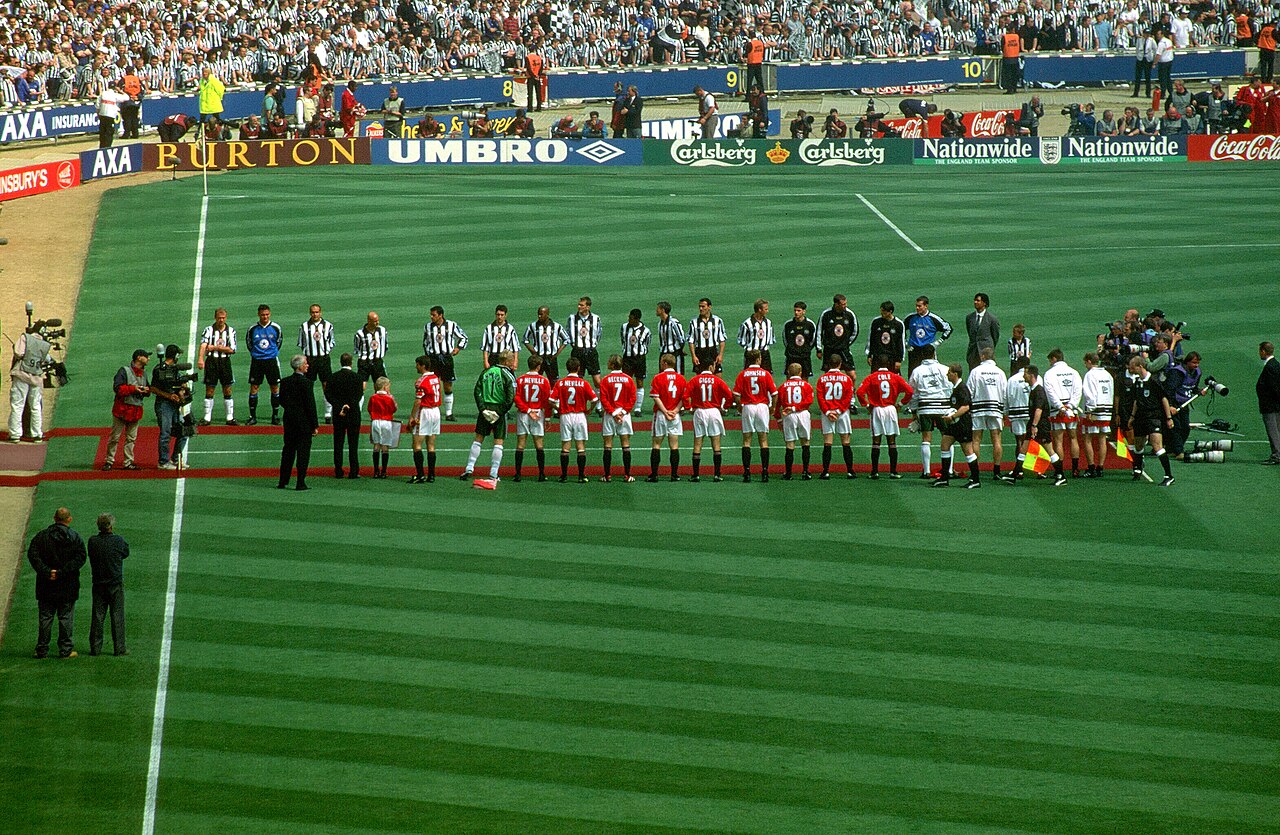
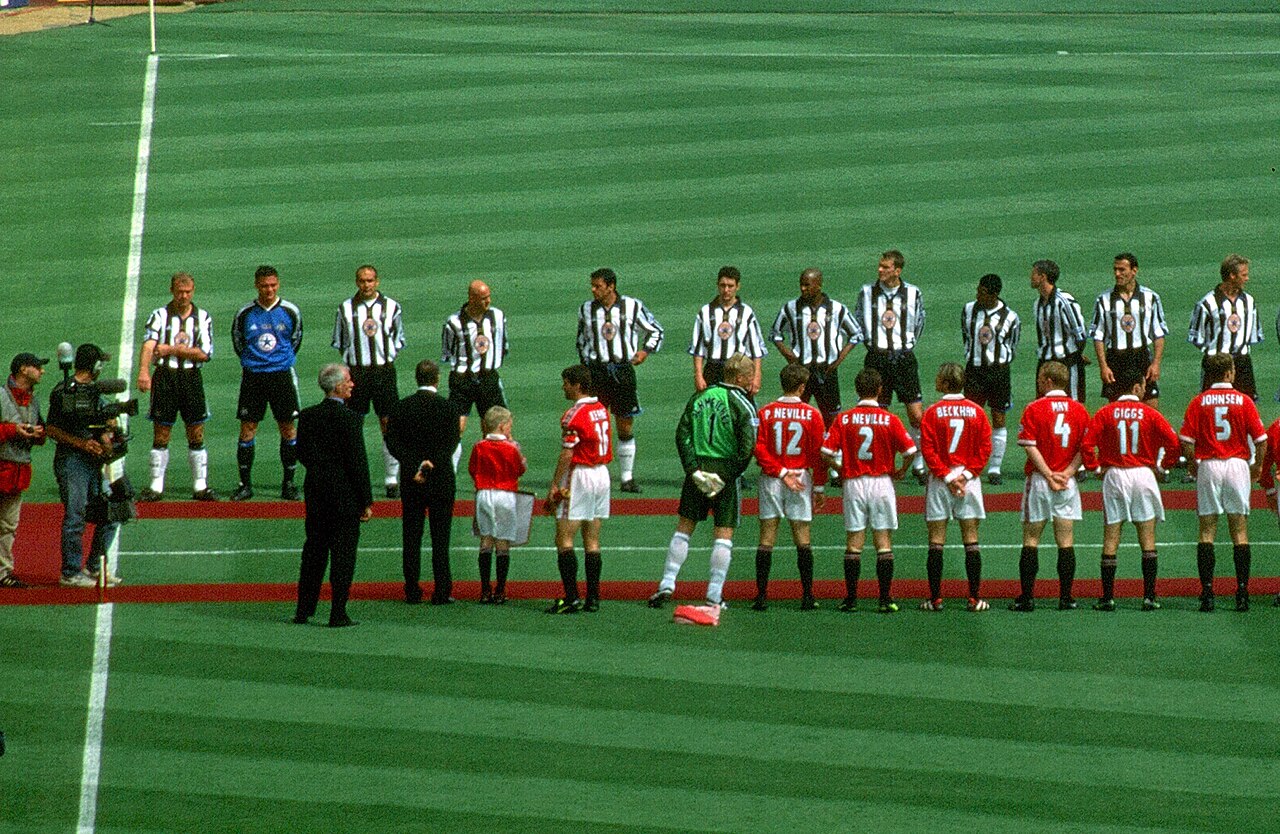
Keane became United captain in 1997 and held the role until 2005. His captaincy coincided with sustained domestic success, including the 1998/99 treble-winning season. One of his most celebrated performances came away to Juventus in the Champions League semi-final second leg. United fell behind, but Keane helped drive their recovery despite receiving a booking that suspended him from the final.
He therefore did not play in the dramatic final victory over Bayern Munich in Barcelona. His influence over the campaign, however, was central to United reaching that stage. During the same season, United also won the Premier League and FA Cup.
Wikimedia Commons
Trophies, awards and statistics
Keane won seven Premier League titles and four FA Cups with Manchester United, as well as the 1998/99 UEFA Champions League. His United honours also included four FA Charity Shields and the 1999 Intercontinental Cup. These achievements placed him at the heart of the most successful period of Ferguson’s reign.
His individual recognition peaked in the 1999/2000 season, when he was named both the Football Writers’ Association Footballer of the Year and the PFA Players’ Player of the Year. Those awards reflected more than United’s results: they acknowledged the range and consistency of his midfield performances.
Statistical databases can vary according to competition coverage and historical definitions. StatMuse records 366 top-flight league appearances and 39 goals across Keane’s spells with Nottingham Forest and Manchester United, while also listing 14 goals in 74 Champions League appearances. Readers looking for competition-by-competition figures can consult the Premier League’s official Roy Keane statistics.
Keane’s significance is not adequately expressed by goals or assists alone. His positioning helped United control transitions, while his communication and anticipation allowed teammates to play with greater freedom. His reputation rests as much on setting a competitive standard as on conventional attacking output.
Departure from United and final season at Celtic
Keane’s Manchester United career ended in 2005. The separation brought an extraordinary 12-year association to a close, including eight years as club captain. His longevity is particularly notable given the physical demands of his position and his uncompromising approach to competition.
He subsequently joined Celtic, a club with which he had long been associated as a supporter. His stay in Scotland was brief, but he added a Scottish league title and Scottish League Cup to his honours before retiring from professional football in 2006.
Across the English and Scottish leagues, Keane was part of eight championship-winning teams. That total, combined with his European success and captaincy record, supports his standing among the leading midfielders covered in FootyBio’s Football Legends archive.
Republic of Ireland career
Keane made his senior Republic of Ireland debut in 1991. He went on to win 67 caps and score nine international goals, representing his country during a period in which Ireland regularly competed for places at major tournaments.
He was part of Ireland’s squad at the 1994 World Cup in the United States, where the team defeated Italy and reached the round of 16. Keane’s work rate and ability to compete against technically strong midfields made him an important part of the national team.
His international career is also inseparable from the events preceding the 2002 World Cup. After a dispute at Ireland’s training base on Saipan, Keane left the camp and did not play at the tournament. The episode became one of the most debated controversies in Irish sporting history, involving disagreements over preparation, facilities and his confrontation with manager Mick McCarthy.
Keane later returned to the international side and continued playing for Ireland before ending his senior international career. His relationship with the national team was complicated, but his quality as an Irish midfielder was never seriously in doubt. More national-team biographies can be found in FootyBio’s International Football section.
Position and playing style
Keane was primarily a central midfielder. At different stages he performed box-to-box duties, supported attacks and operated as a more positionally disciplined presence in front of the defence. His game was based on stamina, anticipation, tackling and simple but purposeful distribution.
His public image often centres on confrontation and physical commitment. Those qualities were real, but they were only part of his effectiveness. Keane read danger early, maintained team shape and understood when a match required control rather than constant forward movement. He also possessed the technical security to keep possession moving under pressure.
As captain, he communicated relentlessly and demanded concentration. That leadership could be severe, and his disciplinary record reflected the risks of his competitive approach. Yet teammates and opponents also encountered a player whose standards were grounded in preparation, responsibility and an insistence that talented teams work without the ball.
Management and coaching career
Keane entered management with Sunderland in 2006. Taking charge with the club struggling in the Championship, he oversaw a major improvement and guided Sunderland to the division’s title and promotion to the Premier League in the 2006/07 season.
His Sunderland team reflected several of his playing principles: organisation, physical commitment and accountability. Remaining in the Premier League presented a different challenge, and Keane eventually left the club in 2008.
He became Ipswich Town manager in 2009. Ipswich did not secure the promotion challenge anticipated during his tenure, and he departed in 2011. Keane later worked in assistant roles, including with the Republic of Ireland, Aston Villa and Nottingham Forest. These positions allowed him to contribute to coaching and squad standards without carrying every responsibility associated with being the senior manager.
His managerial record did not reproduce the sustained success of his playing career, although promotion with Sunderland remains a significant achievement. Readers interested in similar career transitions can explore FootyBio’s manager biographies.
Reputation and legacy
The National Football Museum’s Roy Keane profile describes him as Manchester United’s midfield general during Ferguson’s most successful period. That description captures his wider legacy: he was not merely a member of trophy-winning squads but one of the players who established their emotional and tactical standards.
Keane remains closely identified with Manchester United, Ireland and the formative decades of the Premier League. His confrontations continue to attract attention, but his longevity, honours and individual awards demonstrate the footballing substance behind the image. At his best, he combined the discipline of a defensive midfielder, the running power of a box-to-box player and the authority of an elite captain.
His career also illustrates the complexity of uncompromising leadership. The same intensity that inspired performances could generate conflict. That tension followed him through international football and management, helping to make his biography more layered than a straightforward story of medals and victories.
Frequently asked questions
Where was Roy Keane born?
Roy Keane was born in Mayfield, Cork, Ireland, on 10 August 1971.
Which clubs did Roy Keane play for?
Roy Keane played senior club football for Cobh Ramblers, Nottingham Forest, Manchester United and Celtic.
How many Premier League titles did Roy Keane win?
Roy Keane won seven Premier League titles with Manchester United.
Did Roy Keane play in the 1999 Champions League final?
No. Roy Keane was suspended for the 1999 Champions League final after receiving a booking in Manchester United’s semi-final victory over Juventus.
How many times did Roy Keane play for the Republic of Ireland?
Roy Keane won 67 senior caps for the Republic of Ireland and scored nine international goals.
Which clubs did Roy Keane manage?
Roy Keane managed Sunderland and Ipswich Town. He won the Championship and promotion to the Premier League with Sunderland in the 2006/07 season.
Research note
This biography was prepared from the cited profiles and statistical sources. Readers should cross-check important biographical and factual information, particularly current or changing details, because databases may revise records or classify competitions differently.