Dani Alves is a Brazilian former professional footballer whose adventurous interpretation of the right-back role helped shape elite club football in the 21st century. Born Daniel Alves da Silva on 6 May 1983, he progressed from Bahia to become a central figure for Sevilla, Barcelona and Brazil, combining defensive intensity with the technique and imagination of a midfielder.
His career crossed Brazil, Spain, Italy, France and Mexico and produced an exceptional collection of domestic, continental and international honours. Although statistical totals vary among databases, the broad record is clear: Alves won league championships in three European countries, lifted the UEFA Champions League three times and represented Brazil more than 120 times.
Wikimedia Commons
Early life and development at Bahia
Alves was born in Brazil and developed as a footballer in the state of Bahia. His listed youth clubs were Juazeiro SC, where he spent part of the late 1990s, and Esporte Clube Bahia. That pathway placed him in organised football before his senior breakthrough with Bahia in 2001.
His early career already contained the foundations of the player he would become. Alves was nominally a defender, but his pace, energy and confidence on the ball allowed him to influence play much farther up the pitch. Those qualities proved especially valuable at right-back, a position from which he could overlap, combine with midfielders and deliver the ball into attacking areas.
European attention arrived quickly. Alves moved from Bahia to Sevilla in 2002, following a route taken by many gifted South American players seeking to establish themselves in a major European league. The move brought him into Spanish football while he was still a young player and began a long association with La Liga.
Sevilla breakthrough and European success
Sevilla was the club at which Alves developed from a promising Brazilian into one of Europe’s leading full-backs. Spanish football suited his technical ability, while Sevilla’s competitive growth gave him opportunities in both domestic and continental competition. Over time, he became increasingly important to the team’s buildup and attacking width.
His Sevilla years produced two UEFA Cup triumphs, establishing both the club and the player on the European stage. Alves also collected domestic and international cup honours during this period. More importantly for his longer career, he demonstrated that a full-back could be a major creative force rather than merely a supporting defender.
Alves’s performances attracted attention from clubs competing regularly for league titles and the Champions League. Barcelona eventually became his next destination. No transfer fee is stated here because published figures can differ according to how guaranteed payments and possible additions are counted.
Barcelona and the peak of his club career
Alves joined Barcelona in 2008 and entered the defining period of his career. Playing in teams built around possession, movement and aggressive pressing, he supplied width from the right while also moving inside to support combinations. His understanding with players ahead of him enabled Barcelona to overload opponents without sacrificing the full-back’s traditional duties entirely.
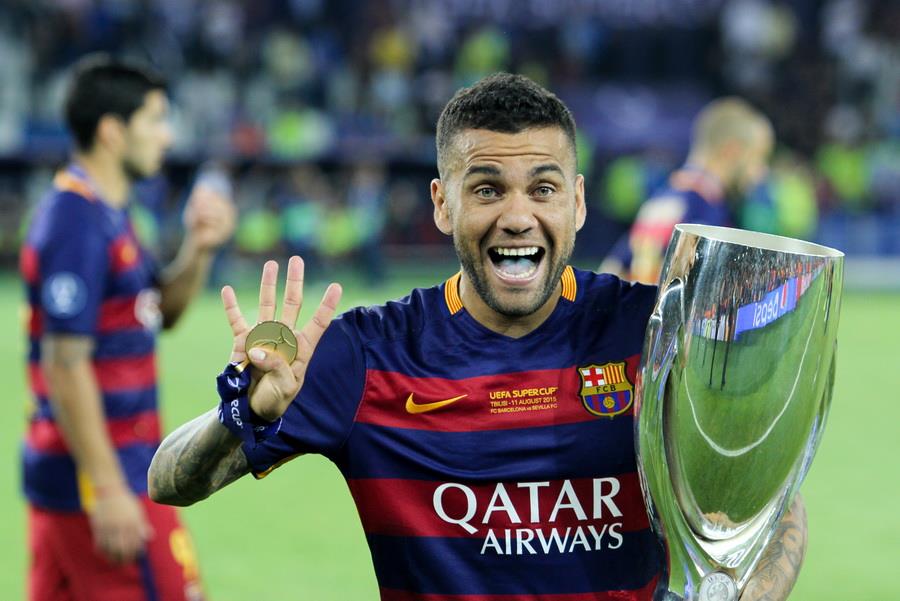
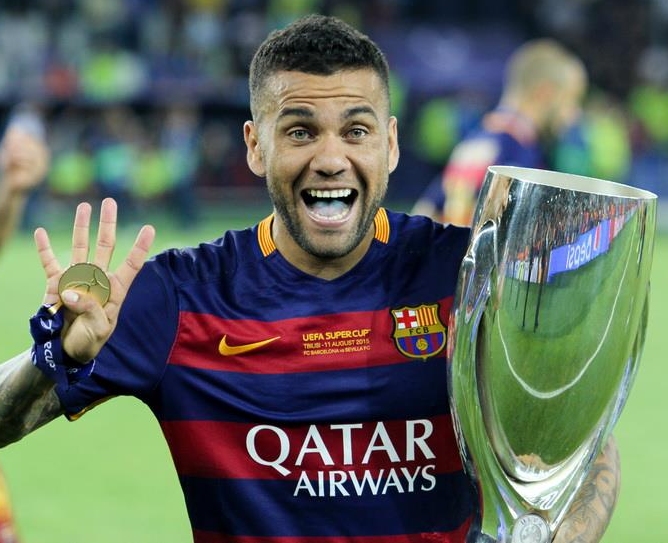
The Brazilian’s first spell coincided with one of the most successful periods in Barcelona’s history. He won six Spanish league championships and three UEFA Champions League titles with the club. His wider Barcelona honours also included multiple Copa del Rey, Spanish Super Cup, UEFA Super Cup and FIFA Club World Cup successes. These achievements are reflected in the career summaries maintained by FBref’s Dani Alves record and other historical databases.
Alves contributed through far more than trophies. His repeated forward runs stretched defensive lines, and his comfort in possession helped Barcelona circulate the ball under pressure. When the right-sided attacker moved centrally, Alves could occupy the open flank. When space was unavailable outside, he was technically secure enough to exchange short passes or step into midfield.
Wikimedia Commons
His influence was particularly visible in high-level European matches. Barcelona’s Champions League victories during his time placed him among the leading players of his generation, and his three winner’s medals are listed by both Transfermarkt and FBref. Readers interested in similar careers ca4n explore FootyBio’s Champions League biographies.
Alves left Barcelona in 2016 after eight seasons in his first spell. By then, he had become strongly identified with the club’s style: bold in possession, relentless without the ball and willing to accept the physical demands of covering an entire flank.
Juventus, Paris Saint-Germain and later club career
Alves moved to Juventus after leaving Barcelona. His stay in Italy was comparatively brief, but it added another national championship to his record. He won Serie A and contributed to a team that reached the 2017 Champions League final. His role showed that, even as his career advanced, he could still operate at the highest level in a different tactical environment.
He subsequently joined Paris Saint-Germain, adding two French league titles to a résumé that already included championships in Spain and Italy. At PSG, Alves’s flexibility remained useful: he could play as an orthodox right-back, a wing-back or in a more advanced and central position when required. His spell in France also brought further domestic cup success.
Alves returned to Brazil with São Paulo, where he was at times used in midfield rather than exclusively at right-back. That deployment reflected his passing range and comfort receiving the ball in congested areas. It also underlined a recurring feature of his career: the positional label “defender” never fully described the scope of his contribution.
A second, shorter spell at Barcelona followed. He later played for UNAM, commonly known as Pumas, in Mexico. Career profiles from WorldFootball.net and Transfermarkt document the sequence of clubs, although appearance and assist totals can vary between databases because competitions and historical coverage are not always counted in the same way.
Brazil international career
Alves’s international career placed him among Brazil’s most experienced players. He earned his first senior cap before going on to represent the national team across numerous tournaments and several different coaching eras. According to the Olympic record of his World Cup career, he reached his 127th Brazil appearance during the 2022 tournament, when he came on in the round-of-16 victory over South Korea.
Wikimedia Commons
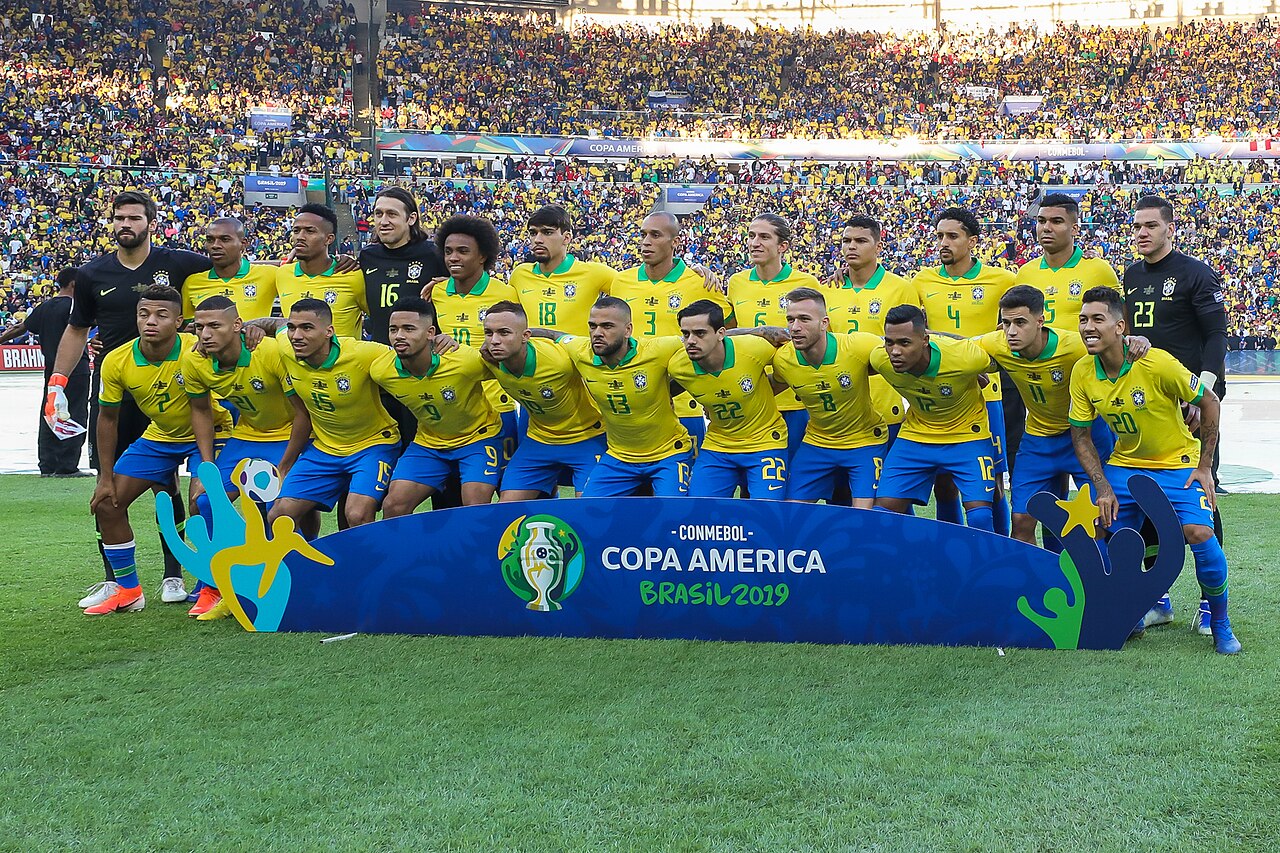
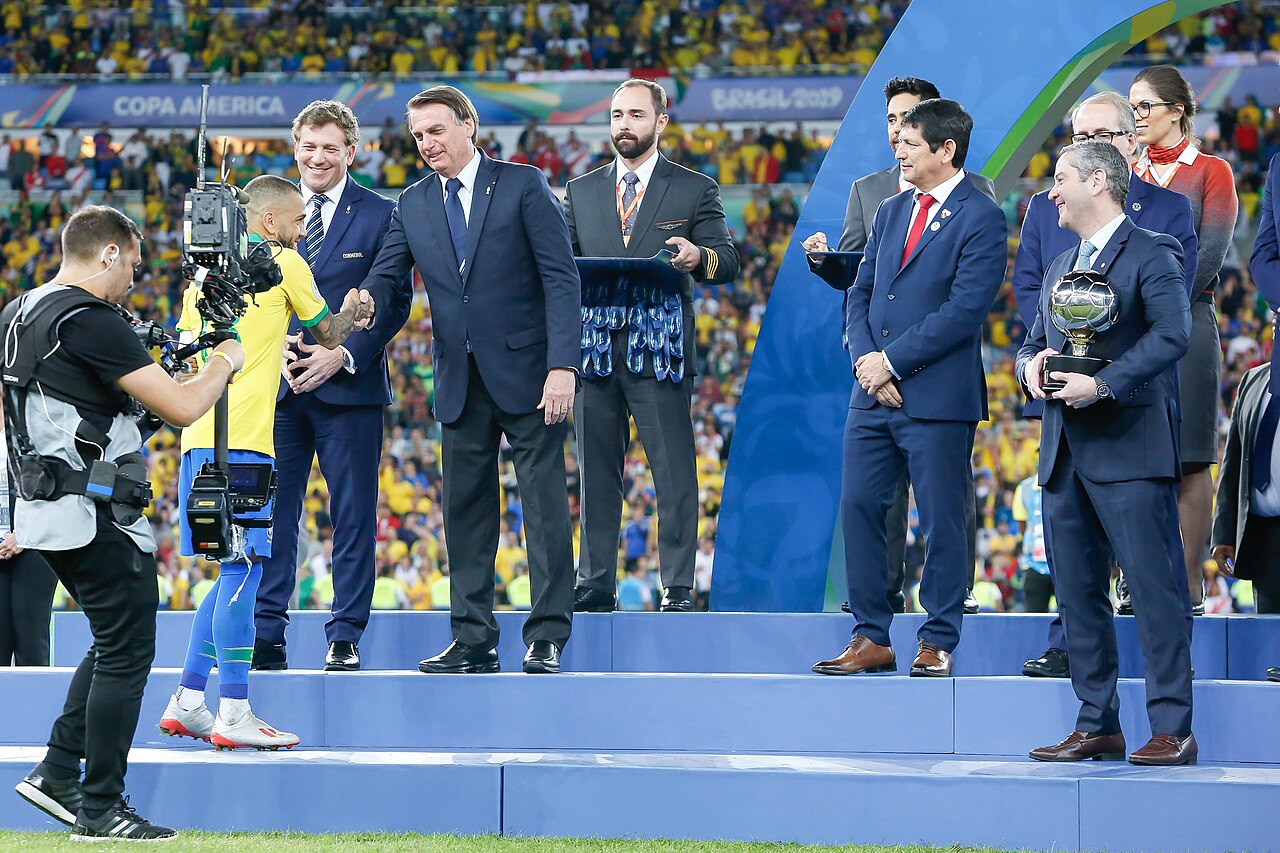
He was part of Brazil’s Copa América-winning squads in 2007 and 2019. The second triumph carried particular significance because Alves captained the team during the home tournament. Brazil defeated Peru in the final, adding another major international honour to a career already defined by sustained success at club level.
Alves also won the FIFA Confederations Cup with Brazil in 2009 and 2013. Later, he took part in Brazil’s gold-medal campaign at the Tokyo Olympic Games, staged in 2021 after its postponement. That success broadened an already unusual international résumé spanning senior continental competition, global tournaments and the Olympic event.
Competition for his position was often intense, and Alves’s Brazil career overlapped with several accomplished defenders. His longevity nevertheless enabled him to remain involved for an exceptional period. More biographies covering national-team careers are available in FootyBio’s International Football archive.
Position and playing style
Alves played primarily as a right-back, but descriptions of him as a defender tell only part of the story. He was an attacking full-back capable of advancing repeatedly, crossing from wide positions and participating in intricate passing sequences. His acceleration and stamina helped him recover defensively after joining attacks, while his competitive temperament suited teams that pressed opponents high up the field.
Technically, Alves could receive under pressure, play first-time combinations and strike set pieces. His movement was equally important. He recognised when to overlap outside a winger, when to underlap into a half-space and when to remain deeper so that teammates could rotate around him. Those decisions made him particularly effective in possession-oriented teams.
His positional versatility became more pronounced later in his career. Player profiles have listed him not only as a right-sided defender but also as a central or right-sided midfielder. The change did not represent a complete reinvention; rather, it drew more heavily on qualities he had displayed throughout his career.
There were risks in such an assertive approach. Any full-back who attacks persistently can leave space behind, making collective organisation and recovery speed essential. At his best, however, Alves balanced those demands well enough to become a reference point for the modern attacking right-back.
Honours, statistics and career standing
Alves’s honours record is extraordinary even when only the best-established achievements are considered. Transfermarkt’s career summary lists him as a three-time Champions League winner, six-time Spanish champion, one-time Italian champion, two-time French champion and two-time Copa América winner. He also won two UEFA Cups with Sevilla and numerous domestic and international super cups.
Different publications have assigned different totals to his overall trophy collection. The variation generally depends on whether certain super cups, youth events and short-format competitions are included. For that reason, it is safer to describe Alves as one of the most decorated footballers of his era rather than rely on a single universal total.
The same caution applies to career statistics. Some databases count only senior competitive club fixtures, while others include national-team games or use narrower competition coverage. Historical assist data are especially uneven: StatMuse, for example, notes that assist coverage varies by competition before the 2014–15 season. Precise all-career assist claims should therefore be treated carefully.
Wikimedia Commons
Legacy
Alves’s football legacy rests on both achievement and influence. His trophy record links him to outstanding Sevilla, Barcelona, Juventus, Paris Saint-Germain and Brazil teams, but his broader importance lies in how comprehensively he interpreted the right-back position. He was not simply an overlapping runner; he could become an additional playmaker, a pressing trigger and a midfielder during the same passage of play.
His Barcelona years provide the clearest illustration of that influence. In a team filled with elite passers and attackers, Alves still became a significant component of the creative structure. Later full-backs have operated in different systems, but many share the expectation that a defender must contribute to buildup, chance creation and positional rotations.
Viewed strictly through his football career, Alves belongs among the most accomplished Brazilian players to spend the majority of their peak years in Europe. His endurance, adaptability and success across several leagues secure his place in FootyBio’s wider collection of football legends.
Frequently asked questions
When and where was Dani Alves born?
Dani Alves was born on 6 May 1983 in Brazil. His full name is Daniel Alves da Silva.
What position did Dani Alves play?
Dani Alves played primarily as a right-back. He was also used as a wing-back and in central or right-sided midfield roles.
Which clubs did Dani Alves represent?
Dani Alves represented Bahia, Sevilla, Barcelona, Juventus, Paris Saint-Germain, São Paulo and UNAM, commonly known as Pumas.
How many Champions League titles did Dani Alves win?
Dani Alves won the UEFA Champions League three times with Barcelona.
What major trophies did Dani Alves win with Brazil?
Dani Alves won the Copa América in 2007 and 2019, the FIFA Confederations Cup in 2009 and 2013, and an Olympic gold medal at the Tokyo Games.
Why is Dani Alves regarded as an influential right-back?
Dani Alves combined defensive energy with advanced passing, overlapping runs and positional versatility, helping establish the attacking full-back as a major creative presence.
Research note
Career records can differ according to competition coverage and counting methods. Readers should cross-check important biographical and statistical information with current authoritative sources, particularly details that may change or be updated after publication.